The Architecture of Silence: Kyoto’s Hidden Courtyards
How century-old cedar timber, raked granite gravel, and filtered bamboo illumination cultivate profound inner stillness.
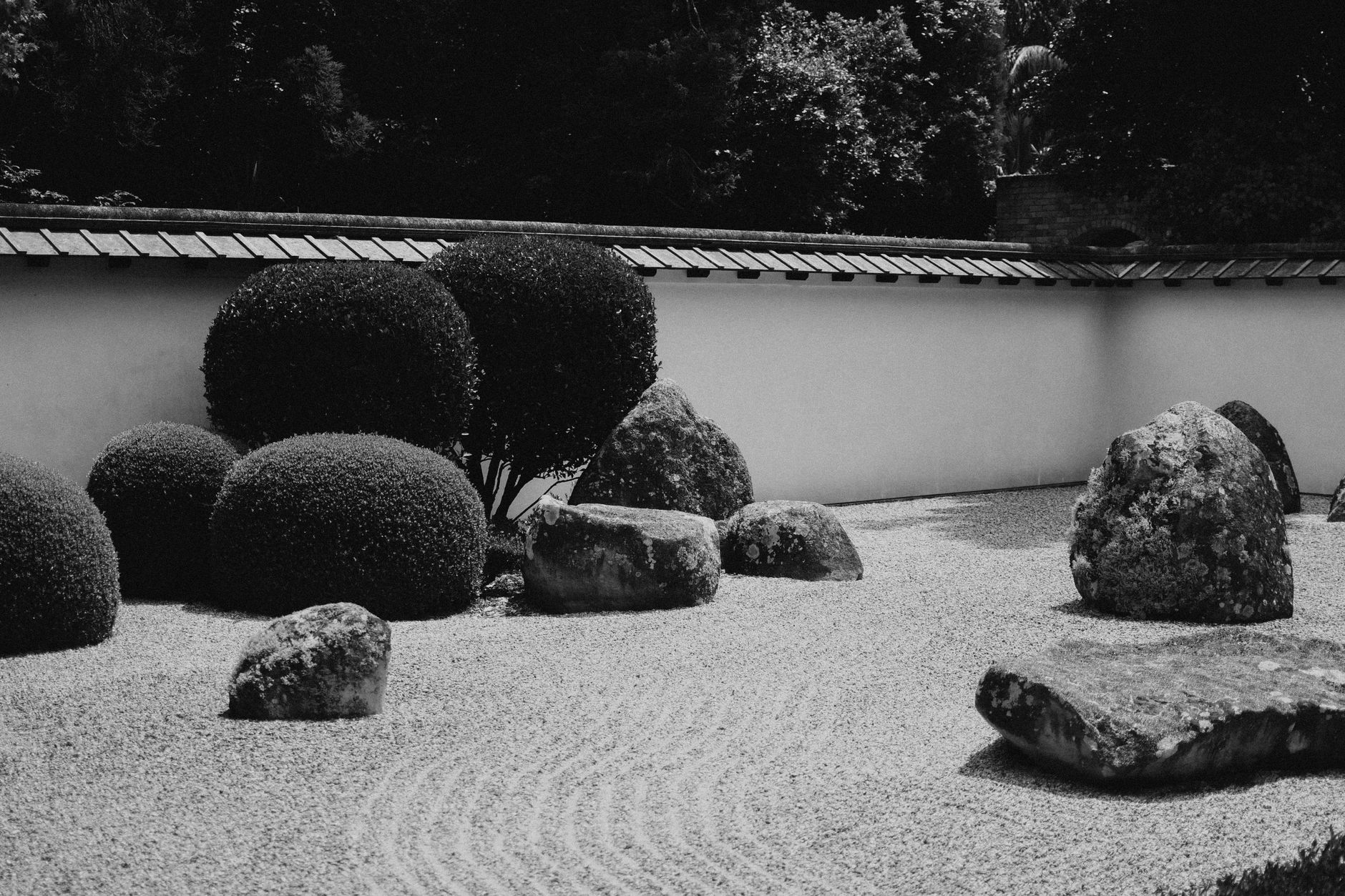
Table of Contents
1. The Threshold Between Urban Noise and Spatial Void
Kyoto does not reveal its soul to the hurried traveler. Stepping off the bustling avenue near the Kamo River, the city’s contemporary hum abruptly dissolves behind sliding lattice cedar gates known as koshi. Here, an intentional architectural compression takes place. The entry alley, often lined with wet dark slate, forces one to reduce stride length, recalibrate acoustic expectations, and adjust visual aperture.
Within the classic machiya townhouse and its affiliated sub-temples in Daitoku-ji, the inner courtyard (tsuboniwa) serves not merely as decoration, but as an atmospheric lung. These modest square meters of ground, sometimes no larger than a tatami mat, introduce ambient natural light and rainfall to the interior living quarters, reinforcing human connection with impermanence.
2. Raked Gravel as Ocean: Deciphering Karesansui
In dry landscape gardens, mineral simplicity replaces floral abundance. Shirakawa granite gravel, crushed into coarse, reflective grains, is raked every morning by resident monks into concentric arcs and straight vectors that symbolize oceanic tides. The placement of stones—frequently grouped in asymmetrical triads—evokes mountain peaks emerging from cloud mist.
"The garden is not designed to entertain the restless gaze; it is a mirror designed to calm the distracted consciousness."
Observing these stones under overcast sky conditions reveals subtle shifts in coloration, from pale grey to rich charcoal as humidity ascends. The absence of vibrant flowering vegetation focuses awareness entirely upon rhythm, shadow length, and texture.
3. Cedar Joinery and the Fragrance of Aged Hinoki
Without a single metallic nail, Japanese traditional wooden architecture relies on complex interlocking joints known as kigumi. Hinoki (Japanese cypress) and Sugi (cedar) woods breathe in accordance with ambient moisture. The scent released during a rain shower is resinous and meditative, grounding the spectator in physical geography.
The engawa—a polished wooden veranda suspended between interior tatami flooring and open garden elements—acts as an liminal sanctuary. Sitting quietly upon these planks during twilight offers a masterclass in restorative architectural poise.
4. Practical Advice for the Mindful Traveler
- Optimal Observation Hours: Visit smaller sub-temples such as Zuiho-in or Komyo-in at 08:30 AM when gravel lines remain fresh and ambient noise is minimal.
- Seasonal Harmony: Early June brings vibrant emerald moss following the rainy tsuyu season, offering the richest acoustic dampening.
- Etiquette & Demeanor: Maintain whispering tones, wear clean white socks when stepping onto cedar floorboards, and refrain from utilizing tripod attachments.