Tuscan Hearth: Generational Gastronomy & Clay Ovens
Uncovering century-old bread cultures, cold stone olive presses, and terracotta amphora fermentation in Val d’Orcia.
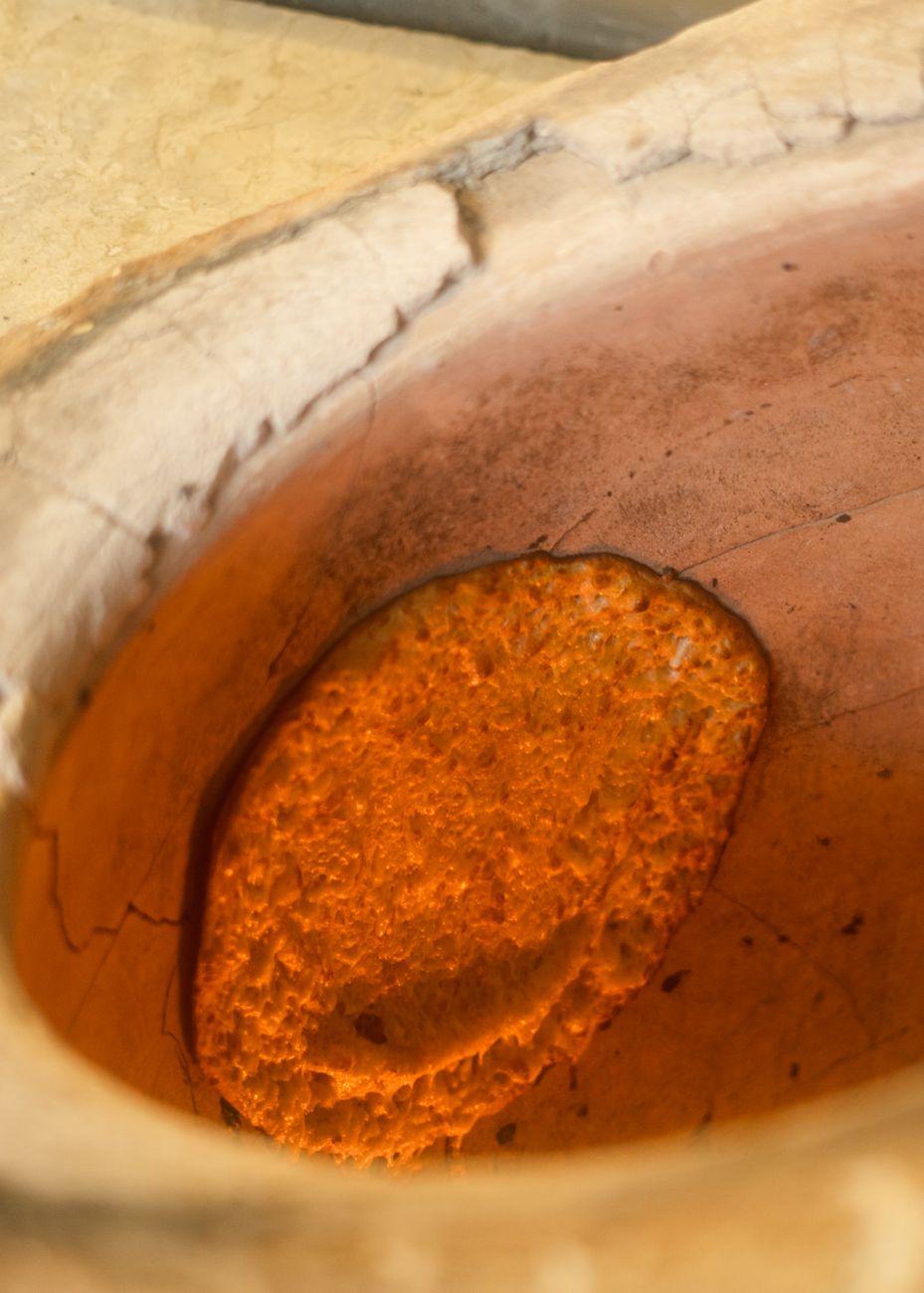
Table of Contents
1. The Saltless Loaf: Historic Rebellion & Pure Grain
In Tuscany, bread is served strictly without salt (pane sciocco). Born out of a 12th-century dispute over punitive salt taxes imposed by maritime rivals in Pisa, the bakers of Florence and Siena adapted their technique rather than capitulate. Centuries later, this omission remains central to the region’s culinary equilibrium.
Because the bread has no competing salinity, it functions as an ideal structural partner for pecorino di Pienza, wild boar salumi, and robust broths like ribollita. Baked inside massive wood-fired masonry ovens built from local riverbed clay, the crust emerges dark and blistered, crackling under hand pressure.
2. Green Gold: The First Cold Pressing of Frantoio Olives
November harvests in the rocky hills surrounding San Quirico d’Orcia yield small, intense Frantoio and Moraiolo olives. Pressed within twelve hours of mechanical hand-raking, the oil pours thick and luminescent green. It carries a distinctive peppery bite in the throat—a chemical signature of high polyphenol concentration and terroir authenticity.
"True Tuscan cuisine is not ornate; it is an uncompromising defense of prime ingredients allowed to speak without adornment."
3. Terracotta Amphorae and Indigenous Sangiovese
While French oak barriques dominated previous decades of winemaking, progressive Tuscan vintners are returning to ancestral Impruneta terracotta vessels. Clay allows oxygen exchange without imparting vanilla wood tannins, highlighting the natural dried cherry, wild thyme, and mineral freshness of organic Sangiovese grapes.
4. Curated Field Table Recommendations
- Forno Moderno & Ancient Mills: Seek out artisanal grain mills grinding senatore cappelli durum flour near Monticchiello.
- Seasonal Window: Late autumn offers optimal olive harvest immersion alongside freshly foraged white truffles.
- Regional Logistics: Rent an electric vehicle to traverse unpaved gravel strata (strade bianche) with minimal environmental disturbance.